“The Sherpa”

photophotophotophotoGoogle Image Result for http--ngm.nationalgeographic.com-everest-img-gallery-31-sherpas-750x500 One of the things that you may have gathered from reading my blog posts is that I live in guilt ridden hell. Growing up Catholic among other things, I have always tried to keep the peace around my house and also keeping the peace on an everyday basis. I am not a confrontational person and usually I would rather inconvenience myself to get the job done, and make sure everyone is happy. That is why I call myself – “The Sherpa.”

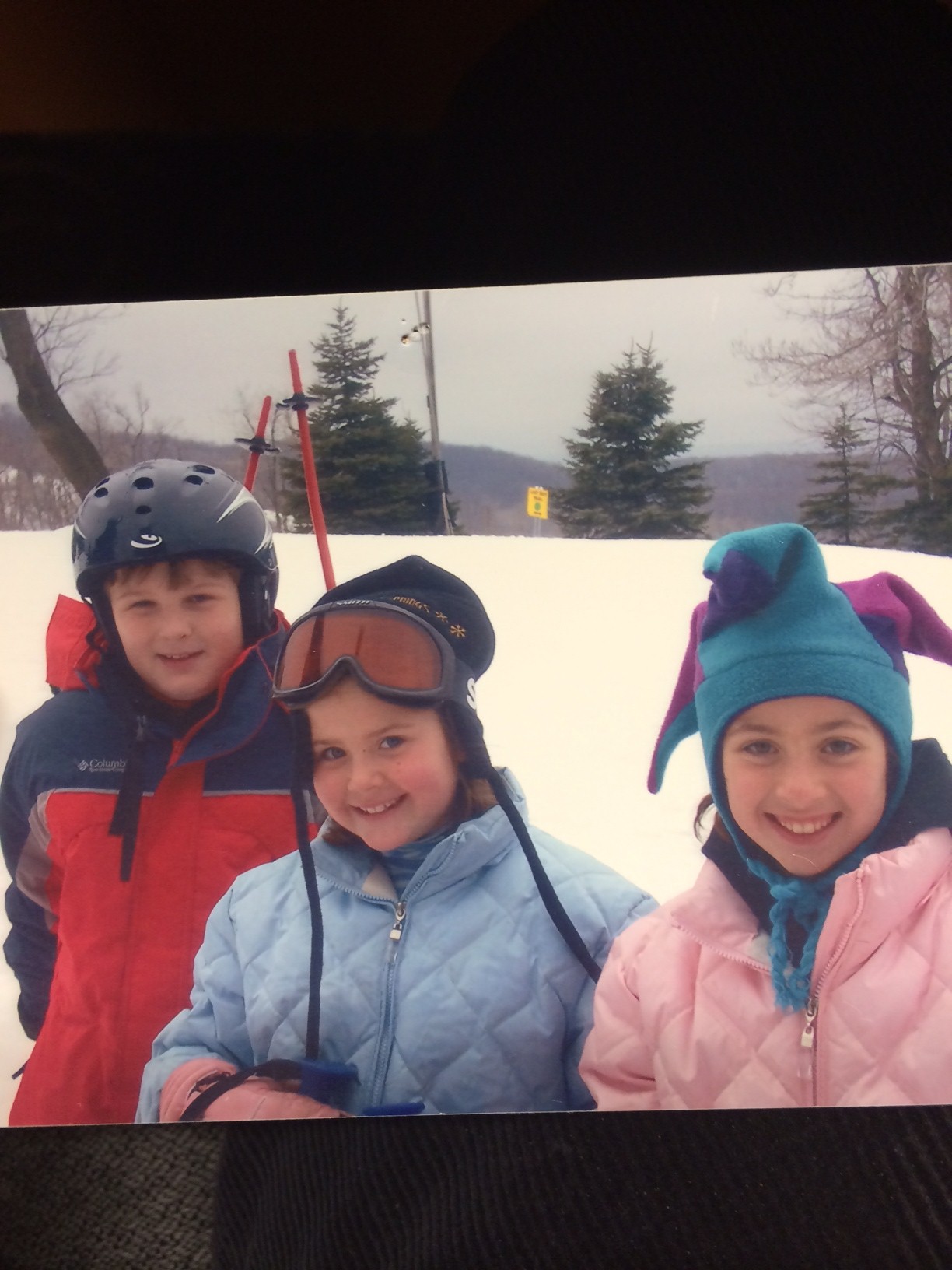
If you look at the picture of the gentleman above with the huge pack and the smile on his face, you will see an actual Sherpa. This tribe of individuals is indiginous to the mountainous regions of the Tibetan Himalaya and they are hard working folks who haul all the gear, tents, luggage for alpine climbing expeditions in the Himalaya. I am sure you have seen and read about these individuals and their feats of strength always amazed me as they made it to the summits with those tremendous loads that they carry. I have always admired the Sherpas and have read a lot about them. In my Walter Mitty way, I am a Sherpa. Take skiing for instance. When I was first married, my wife Janet skied but I wanted to make sure that she always came with me so I took it upon myself to carry her boots and mine in a backback. I hauled her skis on my shoulders along with mine and often walked to the lodge loaded down with equipment. Not that she would not do it, but I wanted to minimize inconvenience. When Jack came along, I bought a bigger pack and loaded three pairs of boots in the pack and hauled three sets of skis on my shoulders and asked them timidly to take the poles. I took it upon myself to help them with their ski boots in the lodge or if we had the opportunity to park near the trail head, I would help them put the boots on kneeling on the frozen ground to minimize any inconvenience or possible complaints due to the definite “pain in the ass factor”of skiing. The sport can be tedious at times schlepping all of the gear in the cold, getting everyone ready with the usual litany of making sure that we had all of the equipment. I was the equipment manager as well as the Sherpa and it worked out well even though I was sweating like a wild man before I took my first turn- even in arctic conditions.

Sometimes, my nieces and nephews would come along and the process became a little more involved with more Himalayan quality schlepps to the slopes. But the smiles were worth it and if there was any inconvenience experienced, I took care of it. Like when my son wanted me to take his socks off because he didn’t like them in the ski boots. I stopped where I was, got down on my hands and knees and took the socks off and he skied the rest of his day with bare feet in the boots. Taking the boots off at the end of the day, they were steaming like a cooling tower at a power plant. Amazing about kids but whatever it took for comfort, that was my motto.

Perhaps the ultimate Sherpa experience besides my family ski outings was the time that I had 13 visually impaired skiers to look after at the National Blind Skiing Championships( read about it in my post-February 17th,2013) I took two of our guys with me but because of weather and a lack of volunteers, I was put in charge of 13 competitors. Congo lines to dinner and the slopes were the norm and my Sherpa skills were sharpened by hauling all of their equipment to the slopes and making sure that I had it all in the van at the end of the day. All of this in below zero temps in the Upper Peninsula of Michigan.

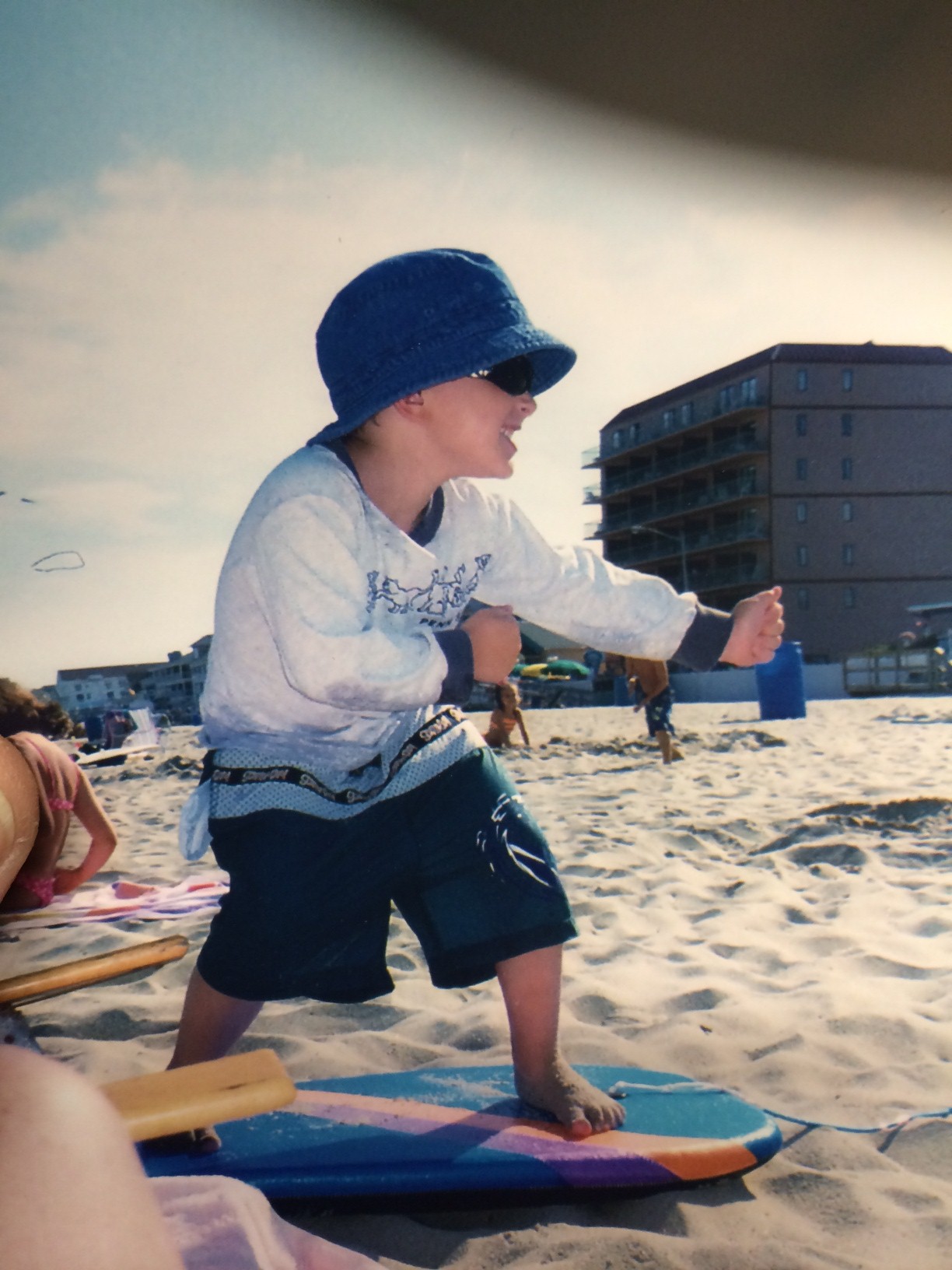
Sherpa family experiences did not take a hiatus in the summer. Hauling beach chairs, umbrellas, pack and plays, coolers, and all sorts of beach toys became a ritual in the early days of the McCloskeys at the beach. Things are a little better now that Jack is grown but the guilt ridden hell still pervades as I haul all of it into the garage after a trip just like in the old days.

One thing you learn being an aspiring Sherpa is that you get used to frozen fingers, bloody knuckles, balancing unwieldy loads, and doing it all with a positive, ” ain’t this great to be out here” attitude. My family likes to do the things that I do to an extent. But they are not as maniacal about the outdoor pursuits as I am. So I have always taken that into consideration as I try to make these outings as pleasant as possible. I am sure many of you have had similar experiences with getting the kids to the mountains or the beach. But I will tell you one thing, every loaded up day on my back was well worth the smiles of my family. Being a Sherpa has been well worth the while. Someday, it will probably be round two with grandchildren. I am hoping the back holds out. Otherwise, I may have to go to the Tengboche Monastary for some guidance by the Tibetan monks to encourage me to keep hauling and keep smiling. Thanks for reading.
Slicing the White Carpet

Franklin Park-20130307-00105makingcorduroy_es12800px-Stok_narciarski_w_Przemy%C5%9Blu_-_Ratrak Skiing is an easy sport to learn. I know a lot of people who have said to me that they would like to learn but are either afraid, or believe that they are too clumsy, uncoordinated, or too old to learn. My response to them is that they should allow me to teach them because I have taught visually impaired skiers for 34 years and “if I can get them to ski, surely I can teach you”. We have a good chuckle about that but the truth of the matter is that……it is the truth. Skiing is not a hard sport to learn and I would encourage anyone who wants to ski to take a lesson and do it right. The Polar Vortex has set the stage for a good winter and now is the time to experience the thrill of skiing if you have the notion to do so.

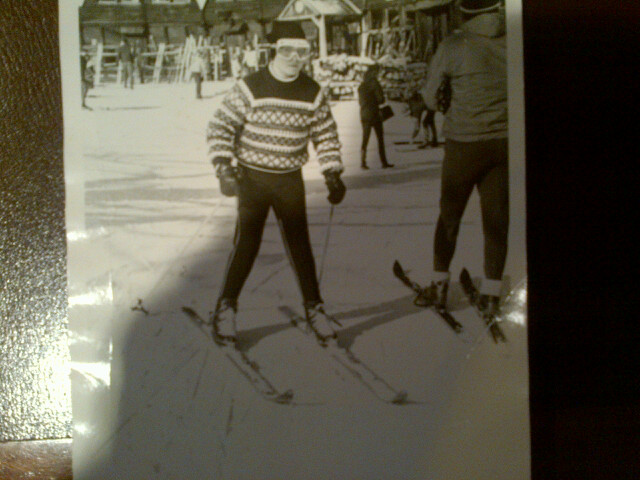
Skiing was not always as easy as it is today. If you look at the picture of me as a young lad above, you will see wooden skis, cable bindings, and double lace boots. The edges on these skis were not very sharp and snowmaking had not yet been developed to any great extent, so we had to rely on natural snow which eventually turned to icy conditions here in the east. Skiing on this equipment was survival and the technique was basically to try to up unweight and get the skis across the fall line the best way we could. Lots of skidding on the icy conditions and not much support with the leather boots. But we didn’t know any better and loved getting out on the snow even if we had to make the best of conditions and survive multiple crashes and spills. As equipment developed, metal skis and plastic rigid boots became the norm and the turns became more stylish and control was becoming a reality. Edges were sharp, control on the ice became better and the elementary beginnings of carved turns were starting to be seen on the slopes.

Fast forward to today and you see shaped skis which are a lot shorter than the ones that we used back in the day. The nice thing about a ski with shape is that the tip is wide and the tail is wide and the waist of the ski is more narrow allowing the ski to be tipped on edge facilitating an easy turn to the right or the left when pressured by flexed ankles. In the beginner area, you can see real progress with this new equipment because it is easier to control and the equipment makes it a breeze to execute beginner moves on the slopes. People make real progress with today’s equipment and make their way to more advanced trails and slopes because of this new technology.

Take a look at the snow groomers above. That technology along with snowmaking has made the sport of skiing even easier to learn. Each evening, the grooming crew take these machines and make white carpets out of bumpy, icy slopes. The hydraulic tillers on the back of the tracked vehicles break up ice, moguls, and other imperfections on the trail. The end result is what skiers refer to as corduroy which you see in the above picture. This is great for beginners on trails and for intermediate skiers on intermediate trails. But as much as experienced skiers love the challenges of powder, steep chutes, and skiing in the trees, there is something about facing a slope early in the morning that has been groomed to perfection. For those who have mastered the art of a carved turn, this sight is appealing in that the skier pushes off with his/her poles, flexes his/her ankles in his/her boots, and tips the edges towards the new turn. When you move your center of mass towards the new turn and slice the ski edges from tip to tail in the radius of the turn that you choose, the arc that is formed in the snow is putting a slice in that nice white carpet. Good skiers can feel the pressured ski slicing those turns and know when any skidding occurs resulting in a determination and concentration to make the following turns perectly carved. If it weren’t for the expensive grooming equipment, and the shape of the skis, and the confident forward postition of the skier, slicing the white carpet might not be possible. Good skiers can feel when a ski carves perfectly and today’s equipment is so good compared to equipment from yesterday, that everyone has a chance to move up one level in their skiing.

The reason that I have gone into detail of the ski turn is to encourage those of you who have not tried skiing to give it a go. Winter is wonderful and there are a lot of options in outdoor winter activity. But in my mind, there is nothing quite like waking on a winter morning, having a good breakfast, taking in a picturesque view of the mountains, and launching into a series of great turns on the white carpet. Whether you are a beginner making wedge turns, an intermdeiate skidding in a wide track parallel stance, or a racer carving it up on the carpet, the thrill is the same. Skiing is an exhilarating sport and anyone who is reasonably athletic can be a proficient skier in a reasonable amount of time. Take a lesson and learn the right way. But make the effort, you will not be disappointed. Thank you for reading and think snow.

Old Friends – Familiar Haunts

photophotophotophotophoto Vail, Colorado was the very first major ski area I ever visited. Way back in high school, there was a trip and I was excited to ski the west. My dad thought it was great and that if I wanted to go, I should save my money that I was earning and put it towards the trip. Great gem of advice from my dad as usual. As a young teenager, it was exciting to get on a plane to Denver and take a bus with my friends to what I thought was heaven on earth, or so it was told to me. Rocky Mountain National Forest, Buffalo Bill’s Grave, the buffalo herd, the space like house that was used in Woody Allen’s movie “Sleeper” were all visible for the first time from the interstate and going over Loveland Pass( or through it- I forget if the tunnel was open at that time) and eventually up and down Vail pass was intoxicating. When you see the lights of Vail for the first time, it almost seems magical to a young guy and as we piled our gear into overcrowded Vail Village Inn, we hardly slept in anticipation of what would be a memorable week of skiing and sunshine.

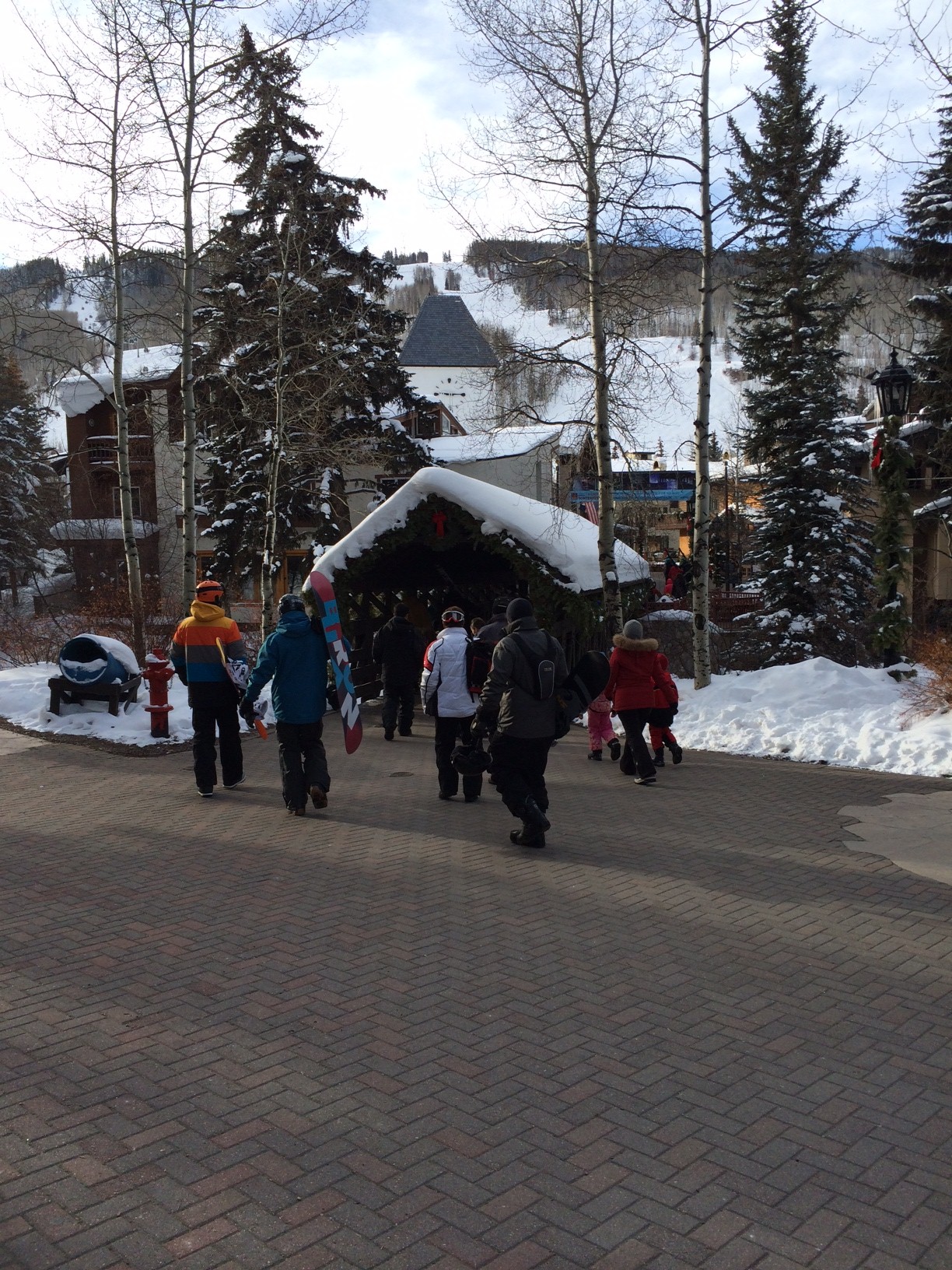
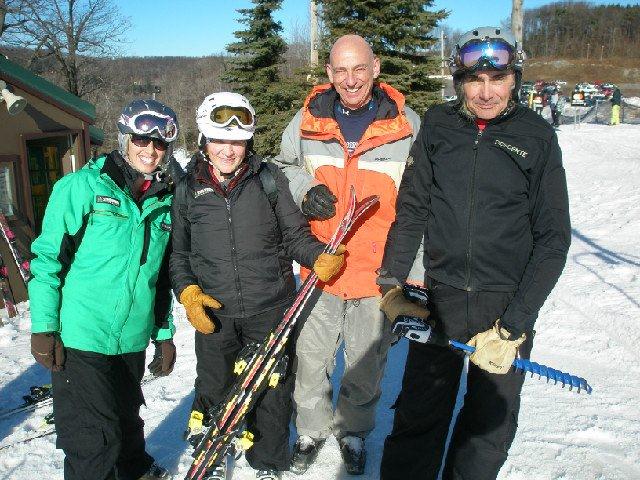
Many years have passed and many miles skied at Vail over the years. But the sight of the clock tower and the bridge, and the walk through town in anticipation of taking the gondola to mid Vail and rushing to the other side before any crowds come is an experience that never grows old. Like my friends in the picture above. They never get old either. Art Bonavoglia, in the red jacket, is my friend for years. We have cycled together and skied together and now at 62, he is spending his third season teaching in arguably the best snowsports school in the world in Vail. Skiing a big mountain every day can do a lot for your personal skiing and although Art works hard and spends countless hours teaching, he has the ability to free ski and work with really quality trainers at Vail. You can tell by his skiing that he is taking this very seriously and is also in great shape in order to execute high level turns. You can’t get into ski shape by just skiing. You need to take the time and effort to hit the gym, run trails, ride a bike, and do whatever it takes to get aerobically, and physicaly strong. Lots of people don’t make the effort as they get older and they pay for it on the mountain.

One guy who makes that effort is Bart Raitano (the guy with the cool shades and the white jacket). Bart is ageless because he pays attention to what he eats, and is faithful on his pre-season gym time. Once the season starts, he is ready to make those beautiful turns of his and he does it over 100 days a year. Bart lives in Vail in the winter and I am lucky enough to visit him. We have been friends for years and it is comforting to know that even though Bart is older than Art and me, he can still ski exceptionally well which gives us the inspiration to keep on training and skiing because it is a sport that we can do for a long time.

Even though I know Vail pretty well, it is a great bonus to ski with guys like Art and Bart who know the mountain really well because they are locals. They know what lifts get crowded first, they know where the groomers have been, so when you ski with these guys, they pretty much set the schedule and the slope selection and we all let it rip all day long. We all have taught skiing for many years so we have a lot of interesing talks on the chair lift about technique- what works and what doesn’t( no matter what PSIA says :). We discuss the latest equipment and why we ski what we ski. All of us are current on equipment and it helps when you are trying to stay in the game. There is nothing like a new pair of freshly waxed and tuned skis on perfect western conditions in a classic area and along with bright sunshine, we were truly experiencing heaven on earth this week together.

Vail is one of those resorts that continues to grow every year and caters to a very exclusive clientel. When you ski different areas, you will notice that some areas are rustic and family oriented. Some are old school with older lifts and grooming equipment. Some are hard core areas where the expert skier is king and ammenities like world class restaurants, spas, exclusive shops, are not a priority. Vail has it all really in that it has excellent skiing and if you want that European, shopping, spa and dining experience, Vail will not disappoint. Everything there is first class and even today, I still get that feeling driving down the Vail valley that I had on that first trip from high school. There is something very welcoming about Vail in that it gave me my first big mountain experience without any pressure. I was in awe of all of the shops, restaurants,and the town itself and am still amazed at how Vail re-invents itself every year. I will say that for a guy who is used to changing his boots in the parking lot( my father in law calls us trunk slammers), it was sure nice to go to Bart’s locker room in the middle of town where the coffee, energy bars, and hospitality are ever present. People know each other and get excited about their ski day in a very gentile way. Vail takes a lot of heat from the jaded skier who sees it as an expensive rip off catering to the wealthy people who can’t ski. That criticism is a little harsh and even though I am not in the league with a lot of the locals who call Vail home, I still feel welcomed by its warmth, charm and world class slopes and grooming. The Back Bowls and Blue Sky Basin aren’t too shabby either.

Short trip this time and driving out of there this morning I was a little nostalgic thinking about all the good times that I have had in that valley. Especially with these two guys who are now- locals. Lucky stiffs.

One little aside, I included a picture of a great book that every ski racer and skier alike should read. Edie Thys Morgan was a World Cup Downhiller and Super G racer for the U.S. She had the highest finish of any American in the Calgary Olympics with a 9th place in the Super G. This book records her experiences on the World Cup. She tells the reader in detail about the training, the personality conflicts, the harsh travel and weather, how hard it is to stay injury free and manage to compete at the highest level. How not to get caught in the “tuna nets” which are the nets on the side of the downhill courses that catch a racer who has made a mistake and crashes hard. This book is exceptionally well written and although the characters are fictional in name to protect the innocent, the circumstances are real and true to life. Go straight to Amazon and buy it. Trust me, you will be glad that you did and give Edie a good review too will ya? Thanks for reading and think snow.

What in the world is the “Polar Vortex”?

photophotophoto The country was gripped this week in sub zero temperatures and we all heard on the news about the “Polar Vortex”. I am amazed that now we have descriptions for phenomena like snow storms, and cold fronts that are named like Hurricanes. Polar Vortex? Hey folks- it’s January. Most of the country experiences winter and in January you get snow, ice, cold temperatures, darkness, and a general feeling of “woe is me.” Some of us have been spoiled with some milder winters as of late, but in International Falls,Minnesota, Fargo, North Dakota, Buffalo, New York, and all of New England, winter rules in January.

Now, you can either let yourself be gripped in fear and depression as the news media bombards you with tales of woe on a daily basis as you exit your home to school or work in the dark and return in the dark, and cold, and the feeling that you live in a Dickens novel. Or you can adhere to the wonderful description of attitude by Chuck Swindoll when he states that “life is 10 per cent what happens to you and 90 percent how you react to it.” Personally, I like winter as you have seen from my blog posts this winter and last. I am a skier. I like snow. I don’t even mind if I travel and am hampered with delays because I have the attitude that I will get through any inconveniences and get to my destination bound and determined to harvest some of the great skiing conditions that are available. Even when I go to my local area early in the morning, when it is dark, and cold, and the roads are covered with ice and snow, I know that soon I will be making turns.

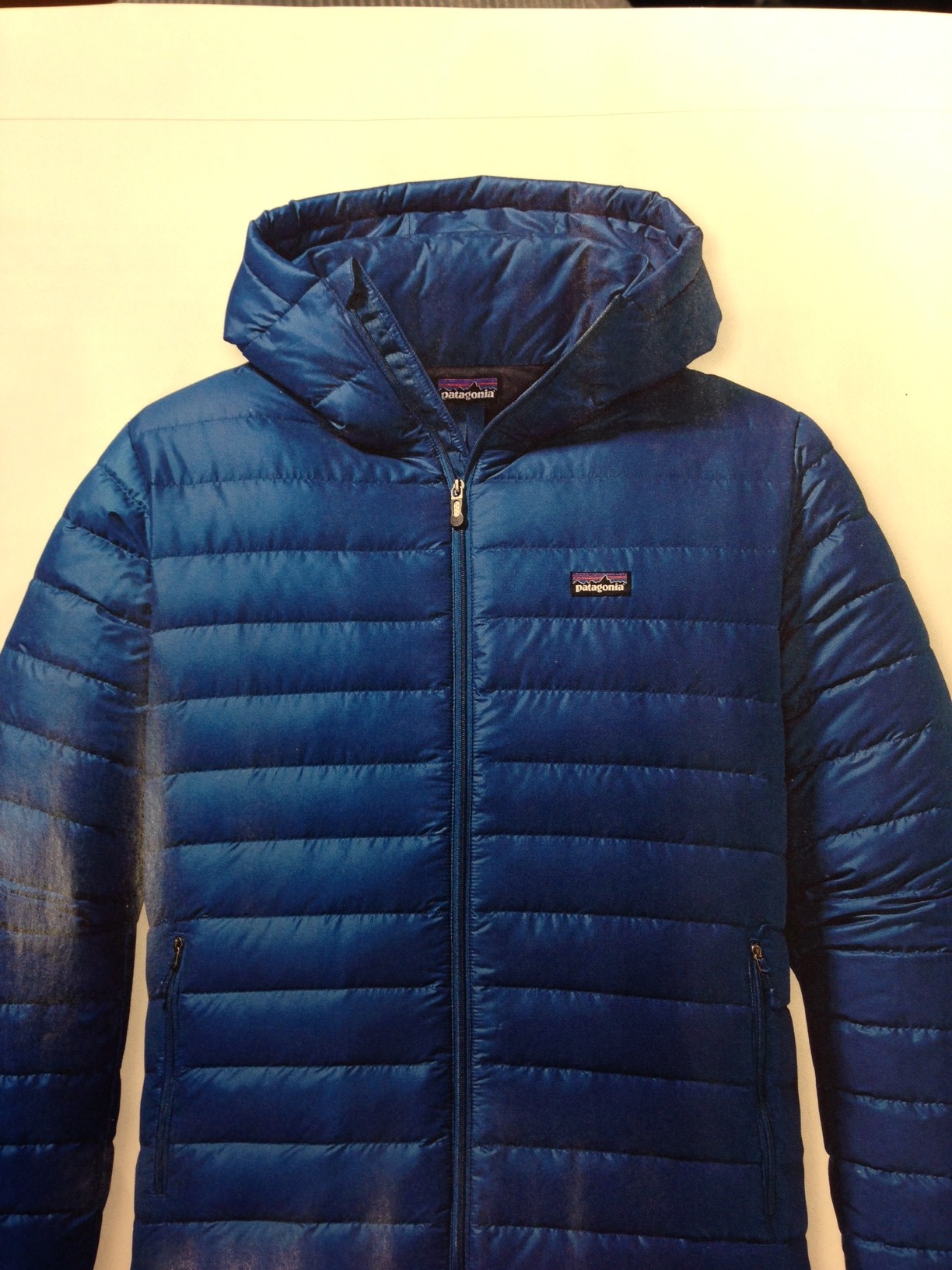
People asked me this week whether I still run the trails at night when it is in the single digits or below zero temperature. I smiled and said “sure- why not.” I love the air, the snow on the trails and trees, and the general good feeling of health when you finish a run in the winter. Like my friend the Shark says,” there is no such thing as bad weather, just bad clothing choices.” He corrected me on that this weekend by saying,” choices Paddy!” I ski and run in Gore Tex Pro clothing. You can layer and be dry as a bone and protected by the wind. Patagonia makes wonderful clothing like this as seen in the pictures above. My “go to” outfit it the Patagonia “Super Alpine.” As they advertise, it is indeed bomb proof and is great for all outdoor activities. I have the down sweaters that I wear under a shell when I ski and I also have polypropylene shirts that I can layer to use on a run or a mountain bike ride. Layering is the key and if you can keep the wind from penetrating your clothing, you can easily ski, ride, or run in sub zero conditions. Check out http://www.patagonia.com.

The main point here though is attitude. My dad always had an expression that said,” Smile- the fresh air is good for your teeth.” Sure it’s dark, and cold, and snowing, but it is winter!! Embrace the winter and thank God you are alive and have the health to enjoy the trails, paths, roads, and slopes, where you live. I heard a lot of moaning this week about the Polar Vortex and the bad weather and I laughed as I left work to go to the trails to run utilizing my headlamp. I will probably ski in the rain this weekend because we will be on the ass end of the Polar Vortex with warm air being sucked up our way as the Vortex exits out over the ocean. Take it as it comes people. Enjoy life. Enjoy the winter. Get snowshoes, cross country skis, alpine skis, ice skates, Flexible Flyers, toboggans and get out there and put that smile on your face. You might cover that mug up with a scarf but get out there and enjoy the winter. Spring will be here soon enough and we all will enjoy the transition. But in the mean time, enjoy what we have and you will be amazed at how positive attitude will help you in your work place, your home, and in your relationships. Try it. My friend Nancy Leverett who is an active skier and is visually impaired, read my recommended book,” Younger Next Year” by Chris Crowley and told me she went right out and joined a gym. She not only enjoys winter sports like skiing and ice skating, she now is motivated to work out to stay in shape for those activities. Check out http://www.youngernextyear.com Great book that I always recommend to help with attitude adjustment.

Polar Vortex? Bring it on man!! Get that positive attitude, get the best equipment and clothes, and go do it!!! Embrace the winter. Thanks for reading.
So you want to be a ski instructor?

photophoto972bda288a6333b6c48ee41b975ddcb8 A lot of folks think that being a ski instructor is a glamourous life. You work in a beautiful, mountainous, picturesque venue. You are perpetually tanned, athletic looking, have the best ski gear and clothing, get the pick of all the pretty girls/guys in your lessons. You get invited to all the trendy parties in the ski area. Everyone adores you because you are a ski instructor. People believe that you are paid well and that you only work in the summer as a supplement to your glamourous job. For some ski instructors, especially in Europe, this may be somewhat true to life. But for most guys and gals working as a ski instructor, the glamour is not so apparent.

In the major ski areas in this country, being a ski instructor is a full time job. In Europe, it is not only a full time job in the winter but it is respected by the public whose protocol is to always take a lesson when they are vacationing in the ski area. Skiing is a way of life in Europe but in the U.S. if you tell anyone you are a ski instructor, most likely it will be seen as a profession that is done until one finds a real job. In recent years, the Professional Ski Instructors of America have done a great job promoting the professionalism of those who are members of their organization that go through the rigorous testing of the certification program. Most of the professionals who work full time in a ski area take their job seriously and are in it for the love of the sport. Yes, you can earn a living but you have to be dilligent and establish a clientele especially in the major areas where families return year after year. But most likely, you will have to at least have a summer job to supplement your winter pastime. So is being a ski instructor all that it is cracked up to be?

I only worked one year as a full time instructor. The rest of my years teaching skiing were part time through college and on weekends at my local area for many years. I can remember driving my mom’s old car to West Virginia for my first PSIA clinic at Canaan Valley and became a registered member. I then racked up hours teaching in Maine and eventually went to my certification exam at Killington,Vermont which I have spoken about in past blog posts. When I ended my full time teaching, I continued to teach on the weekends locally and maintain my certification status by taking the required updates every two years. Similar to most ski instructors in this country, ski teaching is done out of a love for the sport with not much financial benefit. Certification helps the pay rate and also one can get benefits from manufacturers by way of Pro pricing discounts. When you visit a participating PSIA ski area, they give you either a comp ticket or a discounted lift ticket. But for the most part, most ski instructors are part time,are working towards their certification, and the life is anything but glamourous. Many of us who have taught part time have spent countless hours in the beginner bowl teaching new skiers in all kinds of weather. Private lessons and group lessons at night, in brutal cold temperature conditions, rain storms, ice storms, blizzards , are all par for the course in being a ski instructor especially on the east coast. Most of us have done it again out of the love for the sport and the willingness to pass on our knowledge to those who pay for the lessons. What is the upside?

Although most ski instructors teach part time and do it for the love of skiing, there is that wonderful feeling that you have especially if you like to teach, when the student “gets it.” That smile on their face as they master a maneuver is priceless and to most of us, that is worth the cost of the lesson. Most people who take the time to teach, work towards their PSIA Certification,and do it with no great financial expectations. They reap other benefits that can be measured in the smile of the student. Full time instructors work hard and even though they may work in a world class area, their hours are long and the lessons taught all day are taxing. Working with advanced skiers is always a plus because you can refine technique instead of teaching a new person from the beginning with a lot of physical work. But in the end, whether you teach full time or teach part time, if your heart is not in it, you will not be successful. A lot of ski teachers wear the jacket but are not willing to put in the time to develop their skills as a ski instructor. They don’t last long because they are trying to get more out of ski teaching and reap the benefits without a real heart for teaching others. I can say that anyone who takes the time to get registered and go through the 3 part certification process through PSIA is a dedicated teacher.

I remember many days teaching in Maine after college where the temperature was -40 and we were expected to be at the line up. We taught in the brutal cold and kept a close eye on our students to see that they were not experiencing discomfort and frostbite. We took many breaks. I remember teaching many lessons in the rain but the amazing thing was the enthusiasm of the student/students who wanted to learn no matter what. I said to myself,” If they want to learn that bad in these conditions, they are going to get their moneys worth.” I often went overtime to make sure they felt that they had learned something and could take something valuable away with them. This was especially true when I worked with our skiers who were visually impaired. They were always anxious to learn and to experience the exhilaration of skiing no matter what the weather conditions were like. When you have students like these, it makes all the work, little pay, and adverse working conditions worth it because they appreciate the effort that you make and you can see the fruits of your labor.

Lots of people have a negative experience when they first ski because they go with a friend or a relative who have no teaching experience and put the new skier in precarious positions. They often get hurt or at the very least humiliated, and never return. I always encourage people to take a lesson when they first start because the instructor is trained in the proper way to teach the sport of skiing. When you do take a lesson, ask for a PSIA Certified instructor. You will always be assured that you are getting a teacher who has taken the time to learn technique properly and has made the effort to be a part of an organization that fosters learning in a true educational environment. So, do you want to be a ski instructor? I did it for 40 years. Must be something rewarding about it. Thanks for reading and “Think Snow.”

Playing with Fire- Skiing DH Boards.

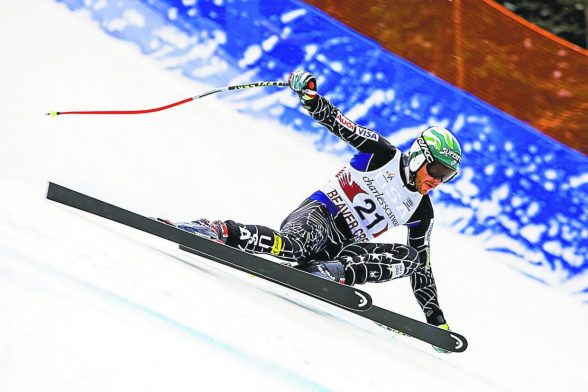
Erik Guay - Race - Atomic USA As readers of my blog, you know that my background is ski instruction and not ski racing. I dabbled in some racing as a young guy and also in the Masters category but suffice to say, I made nice turns in a course but was not fast. When I worked at Sugarloaf, I had the opportunity to witness Downhill racing up close by working on the Can-Am Downhill course from time to time with the race crew. I witnessed the Hahnnenkamm Downhill in Austria up close by hiking up to the start and then watching the race from the Steilhang turn on the course. It was rock hard and those guys are flying. 90 MPH into the finish. Skiing on a downhill course the day after a race is harrowing because it is like skiing on marble. I can’t imagine going that fast on that surface. Speaking with Ron Biederman ( ex US Team downhiller) one day up in Vermont, I inquired how you develop the technique and frankly the guts to ski that fast. He said that it is acquired over a long time with junior races, senior races and eventually getting up to the national class and World Cup level. I have been watching the speed races on Universal Sports Channel and am always amazed at the skill level of World Cup skiers. Several friends and acquaintances of mine have experience racing the downhill and could probably give a discertation way better than me, but I had a glimpse of the discipline watching these races and even entering 2 masters category races with actual downhill boards. No great results but fun to experience.

I actually bought a pair of downhill skis one time when my friend Eric was living in Vermont. We have a mutual friend who works for Atomic who managed to get us two pair out of their Salt Lake City facility and Eric coached me on how to use them. Basically they sat in my garage until I made one of my treks northward to Vermont and we brought them with us to Killington early in the mornings. No one was on the hill and as I tried to keep Eric in view, I was amazed at how fast you could get up to speed with a pair of 220 cm skis. They are rock solid but the speed is a bit un-nerving if you are not used to it. Eric is used to the speed and I had to learn how to ski these long boards without killing myself or killing someone else. After we made a few runs, some people started to come out and when you see someone doing a wedge turn out into the middle of a trail, it is amazing how fast you can close in on them with the 220s. Seeing that they have the right of way, I had to make decisions in a hurry on where to ski so as not to come close to them. We rocketed by people like that until Eric decided that it was time to put them away and get our regular skis for the rest of the day. In a very Walter Mitty like way, I imagined myself as a downhill racer as I tried to follow Eric but as we skied to the K chair I was always happy to finish another run in one piece. I had a lot of fun on those boards and gained an even greater respect for downhill racers by using the equipment that they used. But my speeds were no where near that level.

My wife and I traveled to Steamboat one year and I took the DH boards with me. I used them early in the mornings and scared myself a few times out there but it was fun to ski the west with them on a perfectly groomed trail. I exchanged them for my regular skis when I picked up my wife for the day and she asked how it was. I didn’t let her know that I was playing with fire out there. I meekly put them away and skied the groomers with her. Eric, Travis, Proctor, Edie, Rosi, Gretl,  I have a lot of respect for you guys racing on that equipment in those kinds of races. For the rest of us mortals, watch the men’s and women’s downhill on the Olympic coverage and you will get a feel for how fast this discipline is.

My use of these skis came to an inauspicious ending when as a member of Team Mike Malone, I used them in the Jimmy Heuga Classic at Seven Springs Resort here in PA. The event was a fundraiser for Muscular Dystrophy and the winner had to raise the most money and ski the most runs. It was amazing to see how fast you could cover 800 vertical feet with the aid of downhill skis and a high speed chairlift. All went well until I went a little too far right on one run, hit a mud patch, ejected out of both bindings, and barreled down the slope in a muddy mess. Fortunately the skis were not damaged and I continued the event looking like I had been in a football game. We would have won but someone at the last minute brought in a check that beat us out at the end of the day. The DH boards were retired after that day never to be used again.

Years have passed since those days and I often think about the fun but scary times that I spent on skis that were really not for a guy like me. My friend Eric has always had the habit of sending me into the realm of the unknown but I somehow come out of it with a great experience and the knowledge that I pushed myself again a little out of my comfort zone. 220 downhill skis will do that to you but looking back, it was worth the scare. Watch the Olympics and have a great winter. Think snow and thanks for reading.
Determination – Ski The East

photo70_STE-SP-STEphotophoto I saw an interesting sticker on a guy’s helmet the other day that said,” Ski The East.” Being the inquisitive one that I am, I went on-line and found a really good website http://www.skitheeast.net The fellows that run this site are film makers who feature eastern skiing and have developed their site to include stickers, clothing, and other merchandise and generally provide a good vibe on all that is ……Eastern Skiing in the U.S. So what is so interesting about skiing in the East? Anyone who has skied out west knows the sunshine, the powder, the warm days, the expansive resorts, and if you ask anyone, they will tell you the west is the best…….or is it? Depending on your perspective, the East can offer what the young people call “stoke” and provide at least a memorable ski experience.

I was indoctrinated into eastern skiing right here in Pennsylvania as I have related in many past posts. In my early days, we had wooden skis and leather boots and the edges were suspect to say the least. We have this interesting weather cycle that brings us cold weather and snow off of Lake Erie and occasionally one of those clippers from Canada collides with a slow moving low pressure system that will dump some considerable snow on our area. But on the back side of those Canadian high pressure cells, warm air is pumped up from the south which allows for melting during the day and freezing at night which causes…….ICE!! Sometimes those Canadian highs are not powerful enough to overcome a slow meandering low pressure cell from the Gulf Coast that will shuffle northwards and bring rain that all but destroys the good snow from previous storms. We have to live with these cycles and in the old days, there was a lot of skidding, sliding and general, uptight, sphincter puckering runs down our icy,limited vertical, Pa. slopes. We learned how to deal with those adverse conditions and in the typical Northeast Puritan way of looking at things, it made us better skiers and also made us appreciate the good weather and the new phenomena called snow making.

Fast forward through the years of metal skis, leather buckle boots, and rocketing into the modern age, I found myself skiing in the college years in New England. Places like Cannon Mountain in New Hampshire often had similar weather cycles and the marble like surface on rather steep pitches made it challenging. I found myself teaching skiing after college at Sugarloaf, Maine as I have related in past posts. Even that far north, the weather can be fickle and you can experience the frozen clear surface on runs like the Narrow Gauge which quickly make you realize the value of a sharp edge on a ski. There are a lot of “how to” You Tube videos out there on ski tuning but my main instructor over the years has been my friend Eric who is a born and bred Vermonter. Those Killington guys sure know how to razor up a pair of skis and I still have the original vices that Eric gave me on my ski bench in my garage. A little weekly maintenance on skis can surely make a difference when the weather turns interesting. New Englanders are stoic in their description of ice. Woody Woodward, my old PSIA Examiner friend from Maine used to call it “scratchy.” ” Yea McCloskey, it is a bit scratchy out there today. Your bad habits will be exposed out there today don’t you know.” Like the New England weather, that crusty old Mainer was relentless but a good teacher and a good skier. Heck of a fireman too.

I took my PSIA Certification Exam at Killington years ago, but I will never forget the rains that fell in the first few days. Peter Duke,an examiner at the time, who went on to create SmartWool and Point 6 socks, introduced me to Bukflex which was the waterproof material that made up a sailing suit. It kept him dry and I went out and immediately bought one for that test. Wouldn’t you know the first day of the test, the weather turned really cold and the Bukflex was replaced by every bit of warm clothing I had. Cascade was a sheet of ice and the skiing part of the test was conducted on that slope with examiners licking their chops at the potential pitfalls ready to strike at each of the candidates. Fortunately I survived and my Maine training and even my lifelong familiarity with ice in Pa. helped me. One thing about rain, if you can keep yourself dry, the snow is usually soft and the skiing is rather enjoyable. Bukflex has now been replaced with Pro Gore Tex from Patagonia and last week the 59 year old kid skied in the rain and was bone dry. The same cannot be said for the poor saps who paid for the lift ticket and tried to stay dry in a garbage bag. If you related that story to a westerner, they would think you were nuts. They don’t ski on cloudy days and would never consider even thinking about rain. The skiers in the Cascades have to deal with it and are hearty enough to ski in the rain, but most westerners are spoiled with their perfect conditions. I chuckle when I hear them say it is “icy.” I tell them I am from back east where the black shimmering ice with last fall’s leaves staring up at you though the glass like surface is………….”ice.”

Grooming equipment has vastly improved over the years with tilling attachments and the glare ice of old can be groomed out making the skiing much more predictable. But nonetheless, the eastern skiing experience is for the determined, the hearty, the crusty, toughened, eastern souls who will ski no matter what because it is ingrained in their DNA. Easterners love to ski and no matter if it rains, snows, sleets or freezes to below zero temperatures, you will see these hearty souls out on the slopes battling the elements with a maniacal smile on their face. Even the ones that move out west can be spotted a mile away. They carve turns and utilize the edges when they don’t have to do it in that pronounced manner. Instructors and patrollers in the chair often remark,” There’s an Eastern guy, he skis like he does on the ice.” But some of the best ski racers and skiers the country has ever known are easterners. They had determination on their faces and their eastern hardpack skills launched legendary careers. The 59 year old kid is not legendary by any stretch of the imagination but my determination to ski anything in any condition is something that has been an aquired taste. I love to make turns and as long as the conditions don’t destroy my equipment, you will find me out there with the Gore Tex smiling like a butchers dog. I really smile when I get out west and enjoy what those folks get all the time. They won’t return the favor over here though. Can you blame them? Think snow and thanks for reading.

The Lost Ski Areas

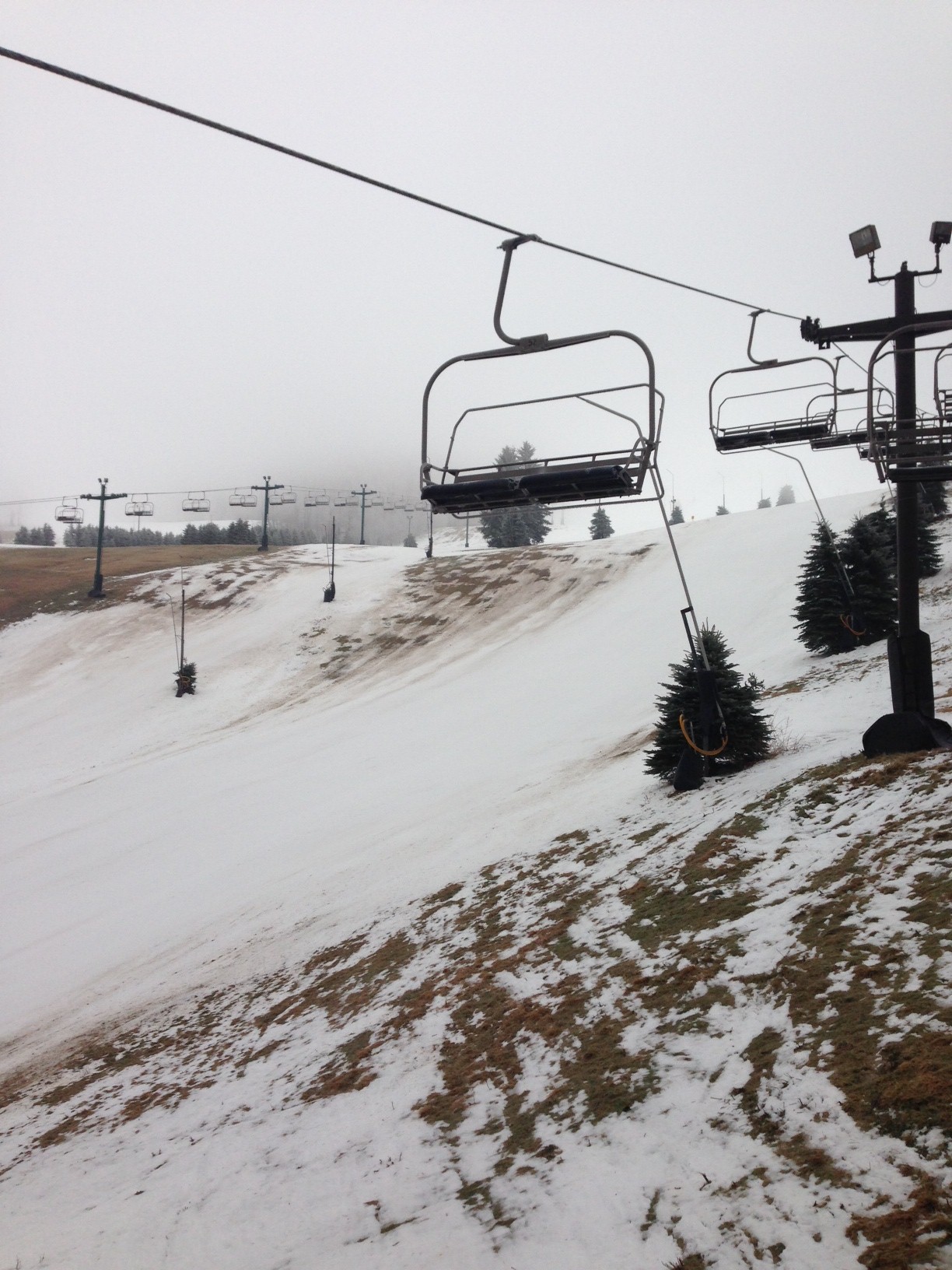
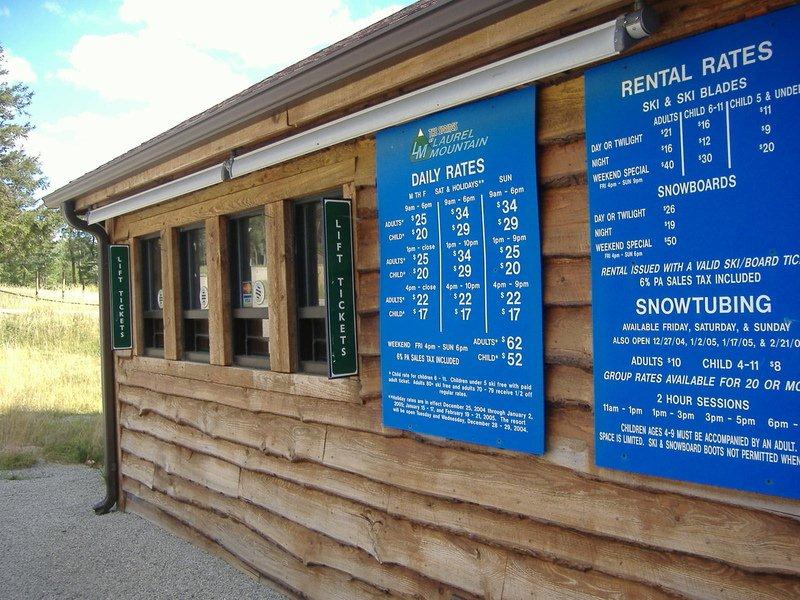
800x600px-LL-cf36c16a_DSCF4404800x600px-LL-dd1752d2_DSCF4395800x600px-LL-53de19e0_DSCF4407newaerialLaurel Mountain Ski Resort will be quiet this season  TribLIVE If you peruse the internet, and look up http://www.nelsap.org, you will find a site dedicated to the preservation of the memory of ski areas in New England that have been closed due to financial and weather related problems. There are many pictures of these “lost” little areas and the site has expanded from New England to New York State, New Jersey, Quebec, Alberta, Colorado, Washington, and Pennsylvania. The sweat equity of the founders of these areas and their passion for skiing was oftentimes not enough to overcome the financial pressures of taxes, electricity, diesel costs, maintenance of lifts and lodges, and payroll. I remember and have skied a lot of these little areas in my time and one of the most memorable was Laurel Mountain in Ligonier, Pa.

Laurel was founded in 1939 and opened to members of the Rolling Rock Club in 1940. The Mellon Family built a beautiful lodge which subsequently and tragically burned in later years. The area opened to the public in 1958 and eventually was turned over to the state in 1964. The Department of Natural Resources ran the area for a number of years until some private management firms tried their hand at running the resort. Weather and financial difficulties forced closings in many ski seasons and the last attempt was made by Seven Springs Resort in the 2004-2005 season. Unfortunately a warm winter accompanied by low skier visits forced the closing of Laurel Mountain up until the present day. There are rumors of re-opening but at this point- only rumors.

Laurel was always a mountain adventure to me. When I was a kid, I remember going up Route 30 and making the right onto Laurel Mountain Road. It was like entering a winter wonderland in a forest setting with snow covering the trees and forming a tunnel all the way back to the ski area. I was mesmerized as a kid with all the snow and the family atmosphere of picnic lunches in the lodge, hot chocolates on the deck, and the fun of being in the mountains in a non-commercialized environment. In college, I taught skiing there as part of the Ski Academy and became friends with many of the state employees who ran the area. The State ran a pretty spartan ship at the time but the trails that meandered in the wilds of the Pennsylvania forest on the Laurel Ridge were a scenic trip back in time. This was how skiing was supposed to be. Family oriented, small snowy area with local charm pervading the scene. The big draw was Upper and Lower Wildcat which was one of the steepest runs in Pennsylvania. At only 900 vertical feet, it still packed a whollop as a challenging run that you could ski all day and never be bored. Occasionally, you would take the surrounding trails for variety and make your way to the main chairlift that serviced the Wildcat slope. There were times when that chair stopped and if you were unfortunate enough to be at the bottom of the mountain, you either had patience and waited, or you began to walk up the trail to the top which was one heck of a workout.

When my son was first learning, I took him to Laurel frequently and made a day out of skiing the trails and then eating lunch and stopping at the Pie Shop in Laughlintown at the bottom of the mountain. Coupled with trips to Fort Ligonier, I had a captive audience with him as I explained the nuances of the French and Indian War which was fought in the very woods that we were skiing. As we ate our apple pies the conversations were either about his skiing progress for the day or the battle at the fort and how George Washington, and Generals Braddock and Forbes played a significant role for the British in the area. I often said that aside from skiing a great little mountain with my son, the better part of the day was the travel to and from Ligonier. It was good father and son time and I will never forget that opportunity that this lost ski area gave me as a father. Many picnic lunches were eaten by the McCloskeys at that lodge at the top of the mountain and the Midway Cabin with its hot chocolate and goodies from the Pie Shop oftentimes was the highlight of the ski day at Laurel Mountain. The snow, the views into the Laurel Valley, and the family atmosphere will never be forgotten.

We often see and ski the big major resorts in the west and New England. We marvel at the money spent on lodging, snowmaking, high speed lift expansion, grooming, and the marketing of the ski experience at a large ski area. Skiing has become a huge commercial offering with investments being made by large firms outside the ski industry. Every year, ski areas compete for the business of families, singles, couples, and company outings. The pressure to be competitive and profitable is intense as ski areas are run as a business and not out of that family oriented, local community ethos that started the “lost’ ski areas of old. I love the opportunities and ammenities of the big areas but I get nostalgic for the history of the sport that was honed in the smaller areas with the slow chairs, limited snowmaking and grooming, and that family atmosphere that was created by the founders of the original ski areas. Skiing Laurel Mountain was like traveling back in time. It was how skiing was meant to be and I can only hope that someday, someone will recognize the value of that gem in the Laurel Highlands and think about overcoming the odds and investing in a worthwhile skiing experience. I can remember asking Herman Dupre (former owner of Seven Springs) why he would not develop Laurel Mountain and he said,” Pat- sit down here and I will give you 38 reasons why.” I listened as Herman was a very successful engineer and businessman. I can see how the area could become one of the lost because of the varied encumbrances that halt its development. But someday, there will be someone who will take the challenge, even if it might not make economic sense, and reopen Laurel and reopen that portal to the past. Think snow and thanks for reading.

The Attack from the Back

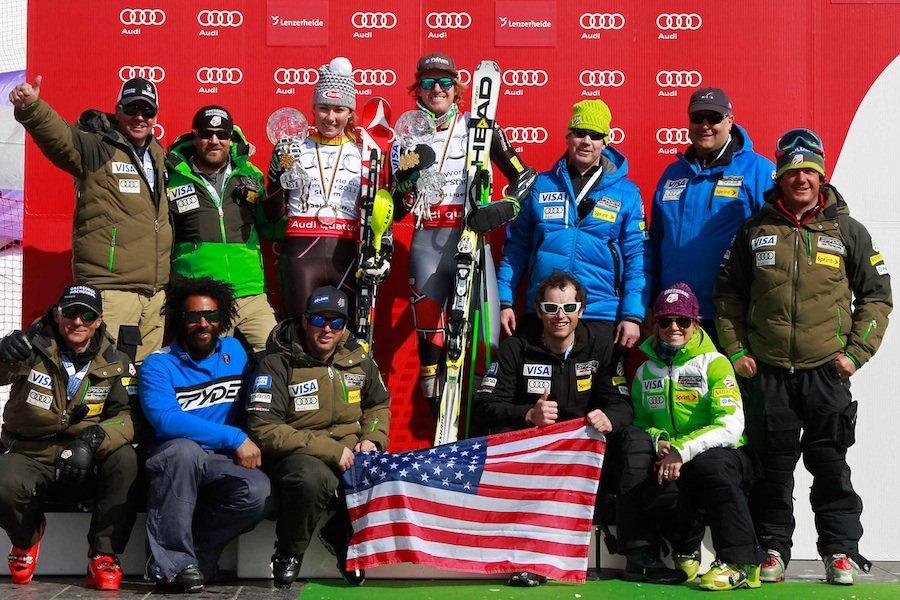
us%20ski%20team.finals2013photo I just came in from my hike in the snow and although it was pleasant, I am dying to ski. I have been out once, but the weather around here has not been consistent for the season to open full scale. So, I placate myself watching all the ski racing on TV and I DVR all of them. I just watched Ted Ligety, our US Team star slay all in the GS at Beaver Creek and watched Lindsey Vonn make her second comeback of the season from knee injuries to finish 10th in a downhill at Lake Louise in Canada. These world class athletes are amazing in that they take their rehab seriously and want to win at all costs. They are not afraid to put it all on the line and risk injury for the reward of a gold medal. My friend Travis Durfee, who at one time was top ten in Downhill and Super G west of the Mississippi for several years and a member ofthe prestigious Far West team, always said that the difference between world class competitors and national class competitors was that fearless attitude to go as fast as they could and put it all out there risking all. Susan DiBiase, another friend, said the same thing about women racing dowhill in mountain biking. If you are not willing to take every risk, you will never reach the pinacle of the sport. She was a pro mountain biker and knew the game. Ski racing is a dangerous sport and I thought of my dabbling in it way back when, and how I was not willing to take those risks at all cost.

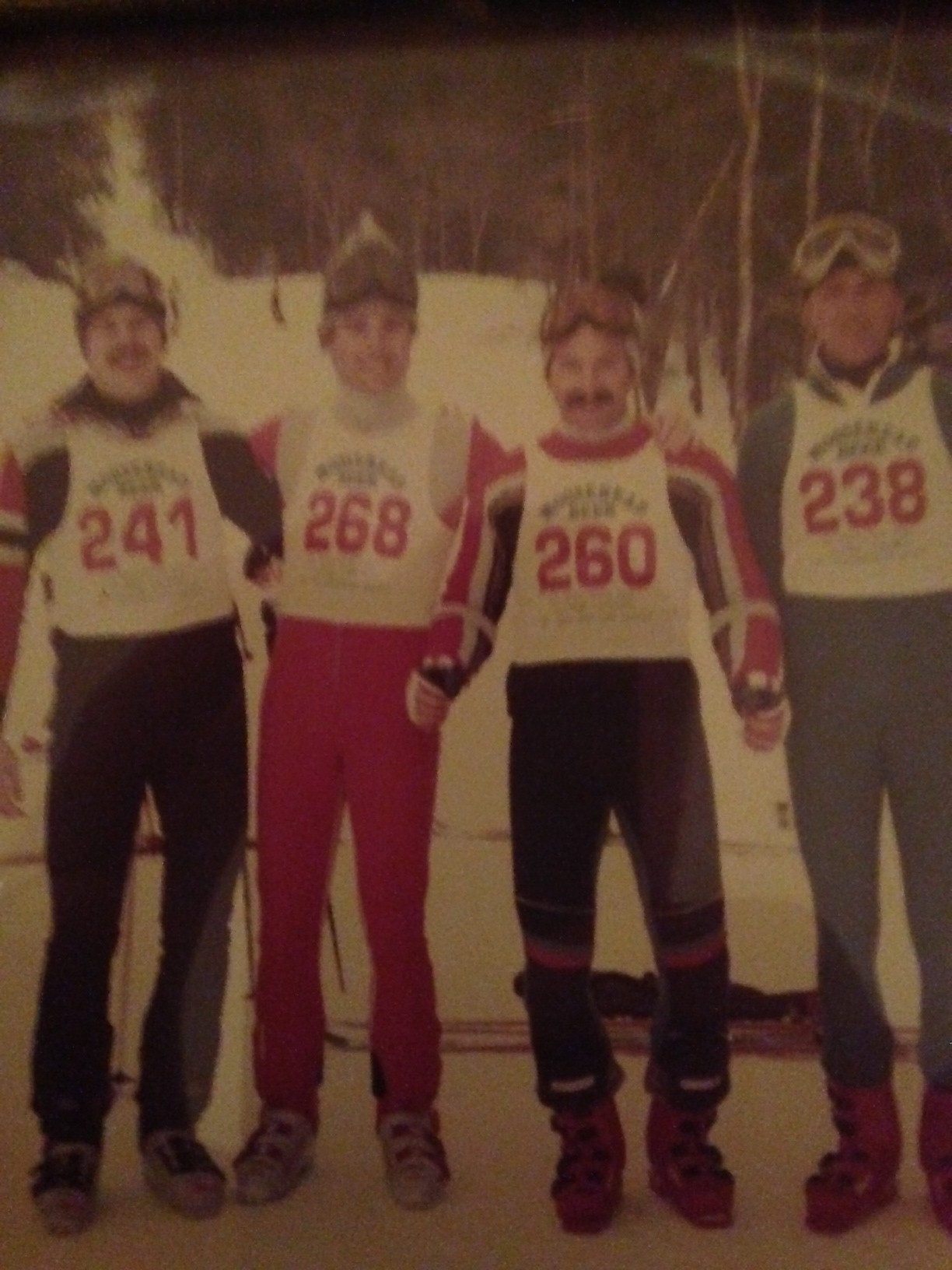
I was not a very fast ski racer. I came from the instructors background and although people said I looked smooth in a race course, I was not fast. Locally, we had several guys who were fast because they tried as hard as they could to beat each other every weekend. We had juniors, seniors and masters races at our local mountain. My group all grew up racing together and when we were in our twenties, we all raced as masters in the USSA races here and sometimes visiting our friends in New England. It was a lot of fun, but guys like Porter Scott, Bill Boucher, and Craig Jerome were the fast guys. They were the tops in our division and my friends Craig Morris and Tim Chappell and I were always chasing their times. We got smart and decided that while those guys were trying to kill themselves to beat each other, we needed to put two consistent runs together and we might end up in the money. Usually one of them or a couple of them would crash because they would be willing to put it all on the line and one or two of us would sneak in there and stand up for two runs and grab a trophy. People got to think we were good but really our strategy was to make sure we finished two runs reasonably fast and hope for the best. That hope was that one of the fast guys or two of the fast guys would crash. We called ourselves the attack from the back and oftentimes we got the trophy. I have a box full of trophies in the basement that are a testament to the fact that I could put together two smooth looking but not fast runs, but fast enough if the good guys tried to kill each other.

I got to see some really good guys when I ventured to New England to race with my friend Eric Durfee who was a really fast racer and had collegiate and Can- Am experience. He was a real ski racer and the guys in New England were a different breed and very competitive and very fast. When our crowd went up there, we got smoked. Even the fast guys. I would do NASTAR races with Eric at Mad River and Killington and would watch him try to destroy the pacesetter while I was just trying to win a gold pin. That is the difference. The fast guys in New England were competitive as all hell and wanted to win no matter what the venue. To this day, Eric is our fearless leader when we ski with him and his competitive nature and win at all costs, is still evident in his free skiing. His son Travis is the same and it is amazing to see these guys in action.

I have also had the good fortune to see World Cup races and see the best in the world. Just like any sport, it is enlightenling to see world class athletes and how they perform. I skied with Phil Mahre one day, who was our greatest male ski racer of all time along with his brother Steve. I got to see first hand how strong they were and how they effortlessly carved trenches in the snow and nothing threw them off balance. I thought I was pretty good on the snow but when I got to ski with world class guys, you quickly realize that these guys are on a completely different level. Ski racing hones good technique and the one thing that was always good about running gates even at my level, was it made your skiing sharp and the little bit of local competitiveness was not only fun, but it made you a better skier. Craig, Tim and I talk all the time about the attack from the back and how we succeeded at grabbing a trophy out from under the faster guys. Eric, Travis, Ted and Bodie would disagree with our philosophy by saying that if you don’t put it all on the line, you will never know what your potential is even if you crash out of a lot of courses. Bodie Miller was a classic example in that if he managed to stand up for two runs, he usually was in the money. He crashed more often than not but his willingness to win at all costs is what makes him world class. The 59 year old kid, unfortunately, did not have the talent or the will to do that. But skiers from the banana belt seldom reach those lofty heights anyhow.

Probably the only time I can remember putting it all on the line was when I was a kid and dove across the finish line at our little Standard Race to try to win the coveted gold 7 pin. I got my pin but took out the timing device and everyone in the lodge thought I had killed myself. Kind of a dumb way to try to be faster but I was proud to win that gold. When you were a fat little kid and you wore that gold 7, you had arrived. I got the bug, but the smooth looking turns eventually won out and the attack from the back was born. Hoping some snow comes our way soon or I will have to keep watching the fast guys show me how it is done. Think snow and thanks for reading.

Enjoy the Olympics

Lake Placid 1980 Winter Olympics  Olympic Video News Medals1625378_10_147x1101081918_10_147x110Sochi 2014 Winter Olympics - Olympic Tickets, Schedules, Games, Newsus%20ski%20team.finals2013 In February, the world will take another breather from the political and social pressure and focus on an event that happens every four years- The Winter Olympics. The Russians are the host of the 2014 Games in Sochi which will again be a spectaclar event shown to all of us on the NBC network. There have been the usual misgivings about whether Russia is ready to host and whether all the construction and supposed environmental issues have been put to rest. But to be sure, Vladmir Putin will make sure that it is all done well. He is not only a strong willed guy but he is also an avid skier. The Winter Olympics will not only be a showcase to the world for Russian commerce and tourism, but it will be a financial boom to an area that is starting to take it’s place on the main stage of winter destinations. One thing for sure, it is an event not to be missed. NBC will have expanded coverage of many events that are not familiar to many viewers, but if you take the time to appreciate the hard work and dedication of the athletes, and that this is the pinacle oftentimes of their careers, you can really enjoy the stories and events that make up the Winter Olympiad.

I love watching the Olympics. Not only because I am a winter sports nut but also I can appreciate the dedication that goes into putting on an event like this and the efforts of the athletes who participate. Unfortunately, this is lost on some local sportswriters who show their ignorance by writing articles that demean the Olympics. When your frame of reference is only football, basketball and baseball, you really should not be reporting on an event with which you have no familiarity. If you visit major metro areas, there are writers who are experts contributing to an enthusiastic reporting of the games. Also,in the cities that have winter sports as part of their infrastructure of tourism, you have this same feeling of support for the events. I have had the experience of writing to the editors of my local rag because their reports on the games have been jaded and lacking the proper information. One guy had the gaul to call the sporting events “games” and that they really are not sporting events. I responded that perhaps football games, baseball games and basketball games are played by gamers and not athletes? I informed him that if he ever took the time to attend a winter sports event, he would see athletic prowess in every sense of the word. A downhill skier rocketing down an icy slope at 70-90 MPH with legs like a fullback is hardly a gamer. A skater performing a triple axel or a hockey player digging it out in the corner against a tough Eastern European team is an athlete. Cross country skiing takes every bit of strength and aerobic capacity to compete at the international level with the athletes absolutely spent at the finish line. I threw a bone at the guy and said that I would maybe consider curling a game, but nothing else. This is the same guy who said that Tiger Woods was not an athlete because he wore pleated pants. I guess my point is to the local sportswriters to get informed and jump on the Olympic bandwagon instead of pooh pooing something that most of the world embraces. Ignorance is revealing in local sports writing and it always happens around the Winter Olympics.

I had the good fortune of attending the 1980 Winter Olympics in Lake Placid. My cousin worked for Coke at the time and gave me $900.00 worth of tickets. My friends, the Durfees, and I attended most of the events but the hottest ticket was hockey. We could not trade or buy any tickets and ended up watching the Miracle on Ice in a bar across the street from the hockey venue. We stood at the top of the ski jumps and my heart was in my mouth as I imagined sliding down that steep pitch and jumping into the abyss only to land to the applause of the thousands of spectators attending those events. Ice dancing, figure skating, cross country skiing were all on our agenda as we made our way through the Olympic Village every day. It was real cold at those Olympics which was typical for the Adirondacks in February. When we arrived at the parking area and were waiting in monstrous lines to catch a school bus to the events, the cold really sunk in and as I admired the Olympic Flame in the distance, the guy next to me who had a distinct Brooklyn accent said,” I’d like to sit my ass in that flame right about now.” We all laughed heartly at that one and the comraderie made the cold bearable. Trading pins was the rage and it became a mission to try to get as many supplier, and team pins as possible. We had the good fortune to see Eric Heiden win all of his speed skating medals and it was amusing to see the Russians hunkering in fear as they saw him take the oval in his gold Descente speed suit. I tried the skates out at the Oval one other year and believe me, it is hard to stand up on those things let alone fly around the rink like Heiden did. He was an impressive athlete who went on to cycling fame with the 7-11 Team and eventually made it through med school and now practices medicine out in California. I met him at a road race one time when we all were staying at the same hotel as the 7-11 team. Even though he had lost some upper body mass, his legs still would be the envy of the Incredible Hulk. You could not meet a nicer guy and for some local sports hack to call what he did a game, is appalling.

If you ever get the chance to attend the spectacle that is the Olympics, don’t pass it up. The energy in the Oympic Village, the opening and closing ceremonies, the pins, the athletes walking around and being accessible for conversation, is something you will never forget. This winter, in February, take the time to watch the events. It is amazing to see athletes participating in short track speed skating, skiing, ice dancing, hockey, and the reported stories of how they sacrificed to get to the Olympics and realize their dreams. Some of them realized and some of them dashed with the agony of defeat. It is a spectacle to embrace. Don’t get caught up in a local rag who publishes writings of some uninformed and jaded reporter. Look for publications and internet stories that are informative and promote the goodwill that is the Olympic Games and foster the Olympic Spirit. Hey, the world needs a break every once in a while to compete against each other in sport and not on the economic or military platform. Enjoy the Olympics and thanks for reading.